


Trekking Poles for Beginners – What to Look for When Buying

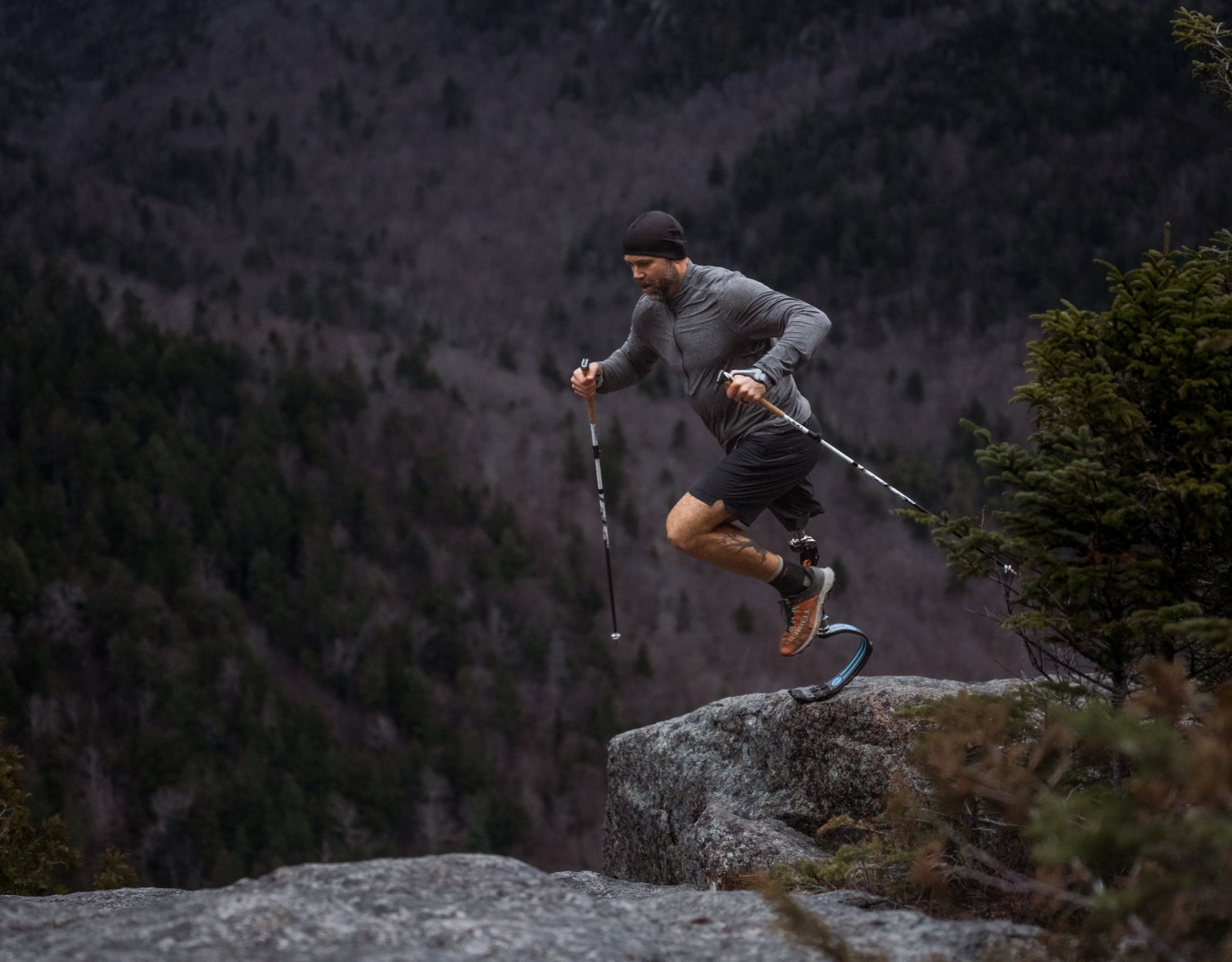
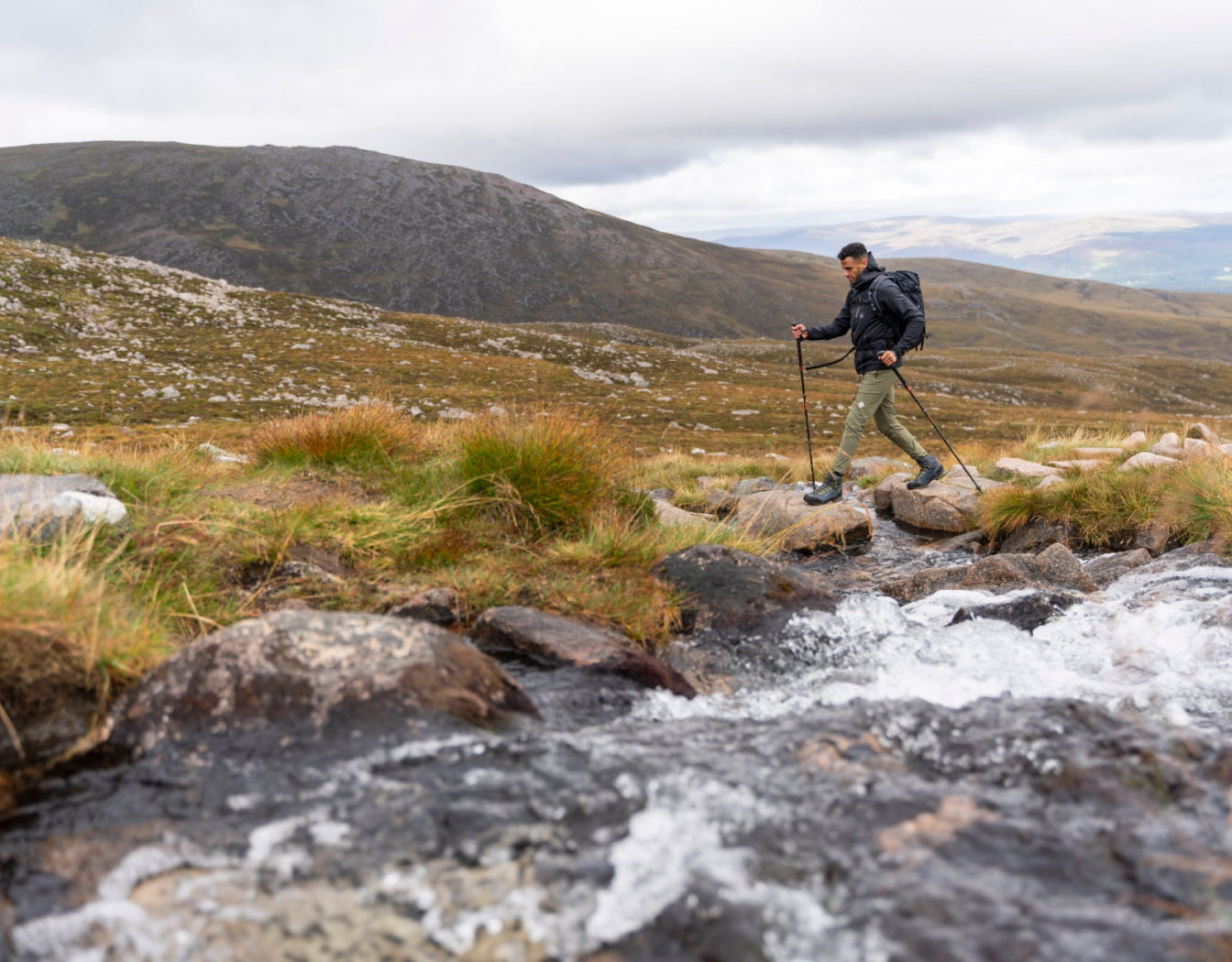
If you're new to hiking or trekking, you'll eventually ask yourself: Do I really need trekking poles? In many cases, the answer is yes. Trekking poles reduce strain on your joints, create propulsion on the uphill, provide greater stability on uneven terrain, and offer extra security, especially when walking downhill. But which model is best for beginners? Aluminum or carbon? Telescoping (collapsible) or folding poles? And what exactly is an anti-shock system, and who needs one?
Here's what beginners should consider when buying trekking poles.
Why Trekking Poles Are Worthwhile
Trekking poles support your natural movement and distribute physical impacts more evenly across your body. They can make a significant difference, especially on longer hikes or routes with substantial elevation change.
Benefits of Trekking Poles:
- Reduce strain on knees and ankle joints
- Improve stability on uneven terrain
- Reliable support on descents
- Assist with balance and rhythm
- Reduce fatigue on long hikes
Beginners particularly benefit because trekking poles help reduce uncertainty and improve confidence on the trail.
Aluminum or Carbon — Which Material Is Best for Beginners?
When shopping for trekking poles, you'll quickly come across the two main materials: Aluminum and Carbon.
Aluminum — The Ideal Choice for Recreational Users
For most beginners, aluminum trekking poles are the best option as they are:
- Robust and durable
- Resistant to impacts
- More economical
- Less sensitive to improper loading or falls
If you're just getting started with hiking or trekking or are new to using poles, aluminum shafts provide a reliable and uncomplicated setup.

Carbon — Lightweight but More Delicate
Carbon poles are featherweight and are often preferred by experienced hikers or those wanting to shave ounces from their hiking/backpacking kit. Carbon saves weight and offers a very responsive swing feel. However:
- They are usually a bigger investment
- They are more sensitive to strong impacts
- They can break under extreme stress or improper loading

The Right Grip — Comfort and Control on the Trail
The grip plays an important role in trekking poles because it affects comfort, control, and handling during your hike. Depending on the intended use, different grip shapes and materials offer different advantages.
Lightweight foam grips, such as the minimalist Verticon, are particularly well-suited for sporty and fast-paced hikes. They stand out due to their low weight, high breathability, and comfortable feel. Grip extensions also provide greater flexibility when changing hand positions on steep terrain.
Ergonomically designed grips, such as the Aergon or Aergon Air, focus on all-day comfort and control. Their supportive surfaces and natural hand positioning create a secure and comfortable feel, especially on longer hikes and descents. Models like the Aergon Air additionally offer lightweight construction and excellent terrain control.
Compact, economical, and straightforward options such as the Evocon or classic PAS grips are also excellent choices for beginners. They feature ergonomic shapes, easy strap adjustment, and a comfortable grip.
As a general rule, the right grip should feel comfortable in your hand and match your intended use. On long hikes, ergonomics and comfort can make a significant difference.


Fixed-Length, Telescoping, or Folding Pole?
The pole shaft design is another important consideration.
Fixed-Length Poles
Fixed-length trekking poles have a set length and cannot be adjusted. They are lightweight and stable and don't have any moving parts, but are generally better suited for specialized activities or for those who don't adjust pole length in changing terrain. For beginners or those new to poles, adjustability and versatility are important.

Telescoping Poles
The classic trekking pole design. Allows for extension and contraction just like a telescope. Usually in 2 or 3 sections. Also known as "collapsible" poles.
Advantages:
- Length can be adjusted on the fly without the need for tools
- Versatile and adaptable
- Ideal for different body sizes and terrain types
The length can be quickly adjusted when hiking uphill or downhill. For beginners, a telescopic pole is often the best choice, as it lets you test different lengths until you find the perfect fit for each type of terrain.

Folding Poles
Folding poles can be collapsed to a very compact size and easily stored in a backpack.
Advantages:
- Compact packed size allowing for easy packing in a checked bag
- Lightweight
- Convenient for travel and stowing in backpack when not in use
If you travel frequently or want the most compact option possible, a folding pole can also be a good choice for beginners willing to make the investment.

The Right Tip — Better Grip on the Trail
The tip determines how well the pole grips different surfaces.
Carbide Tip
The standard choice for hiking and trekking poles:
- Durable
- Provides excellent traction on rocks, gravel, and forest trails

Rubber Tip Protectors
If you spend a lot of time on asphalt or paved paths, rubber tip protectors can be useful. They reduce noise and protect the pole tips from wear. Rubber tips are also useful when you want poles for stability indoors.

Anti-Shock — Useful or Not?
Some LEKI trekking poles feature an anti-shock system. This built-in DSS damper system allows the pole to absorb some impact when it contacts the ground, providing additional comfort while hiking.
The shock-absorbing effect can noticeably reduce strain on joints and muscles, particularly on hard surfaces or during long descents. Many beginners find walking more comfortable because the impact is cushioned, reducing stress on the knees and wrists. The DSS elastomer can reduce impact by up to 40%.

How to Size My Poles
The easiest way to size your hiking poles is to adjust the sections so your elbow forms roughly a 90 degree angle when you are holding the grip with the pole tip resting on the ground. For uphill travel, shortening your poles can reduce strain on your shoulders and improve forward propulsion. On descents, lengthening them allows you to reach farther down the trail, increasing stability and control.
When hiking on firm surfaces where the pole tip below the basket is not penetrating the ground, consider shortening your poles by 1 to 2 inches from your standard 90 degree setting. This compensates for the lack of tip penetration and helps maintain proper body position and efficient pole placement.
Conclusion: Which Trekking Poles Are Ideal for Beginners?
For beginners, the following setup is generally recommended:
- Aluminum rather than carbon
- An ergonomic trekking grip
- An adjustable telescoping pole
- A durable carbide tip
- Optionally, an anti-shock system for additional comfort
Most importantly, the pole should feel comfortable and suit your intended use. With the right trekking poles, hikes become more comfortable and significantly more enjoyable, especially for beginners.
